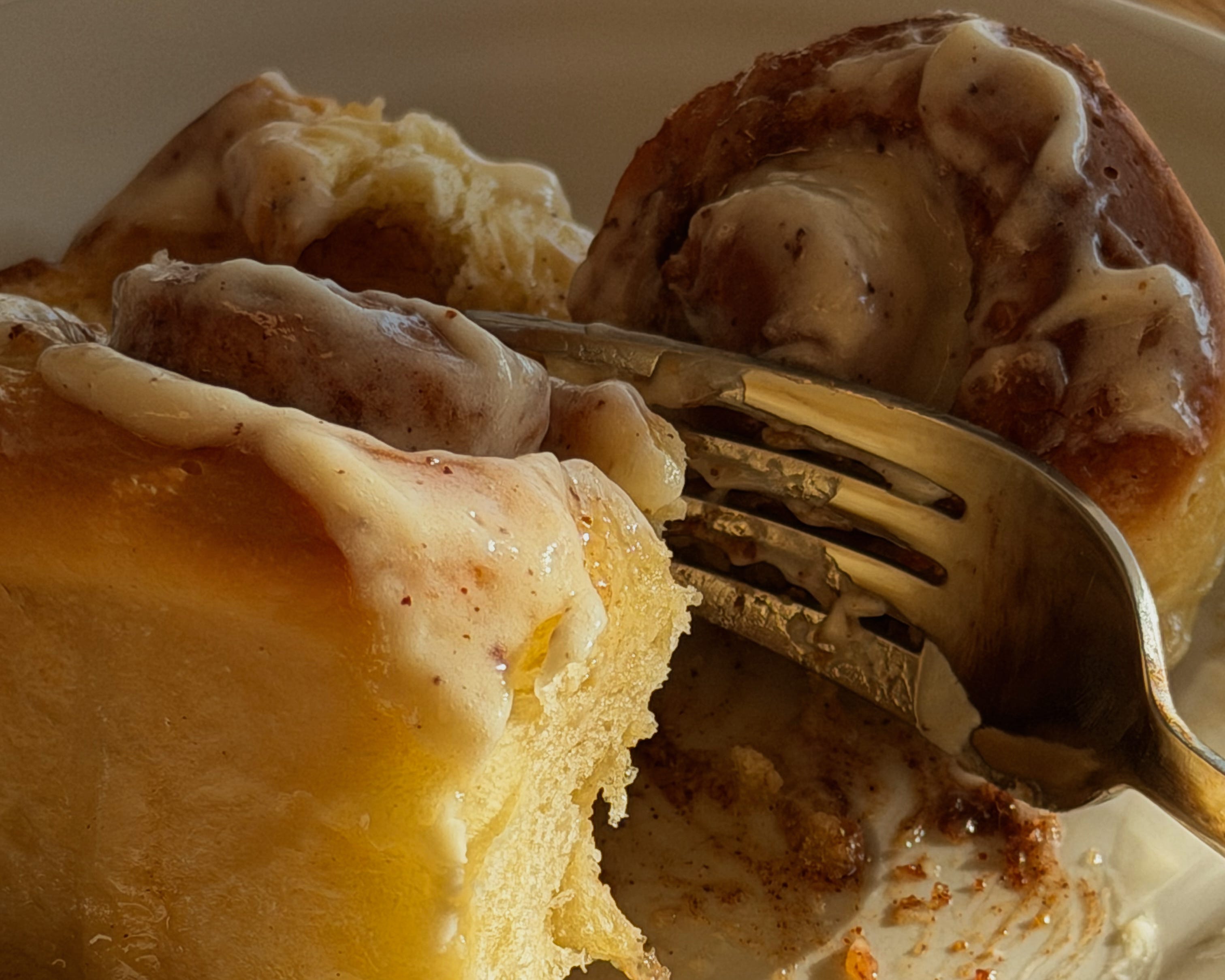

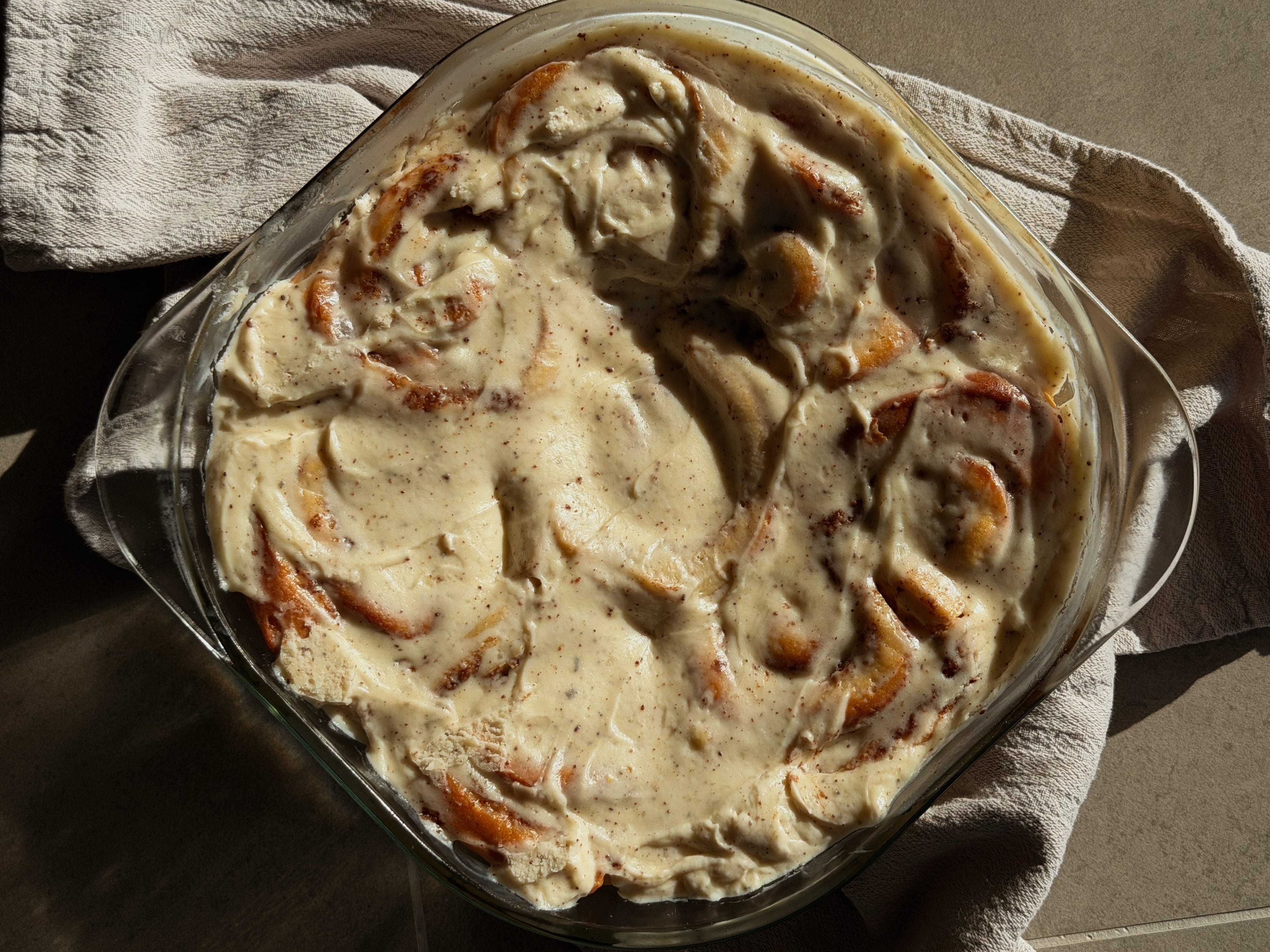
These are the kind of cinnamon rolls you’ve probably seen all over TikTok, but better. Super soft rolls, a gooey cinnamon center, and frosting that melts right into the swirls. This is the at-home version that truly delivers.
The texture comes from two simple techniques. A small cooked milk-and-flour paste keeps the crumb extra tender, and the cinnamon filling is mixed into a smooth paste so it stays creamy instead of gritty.
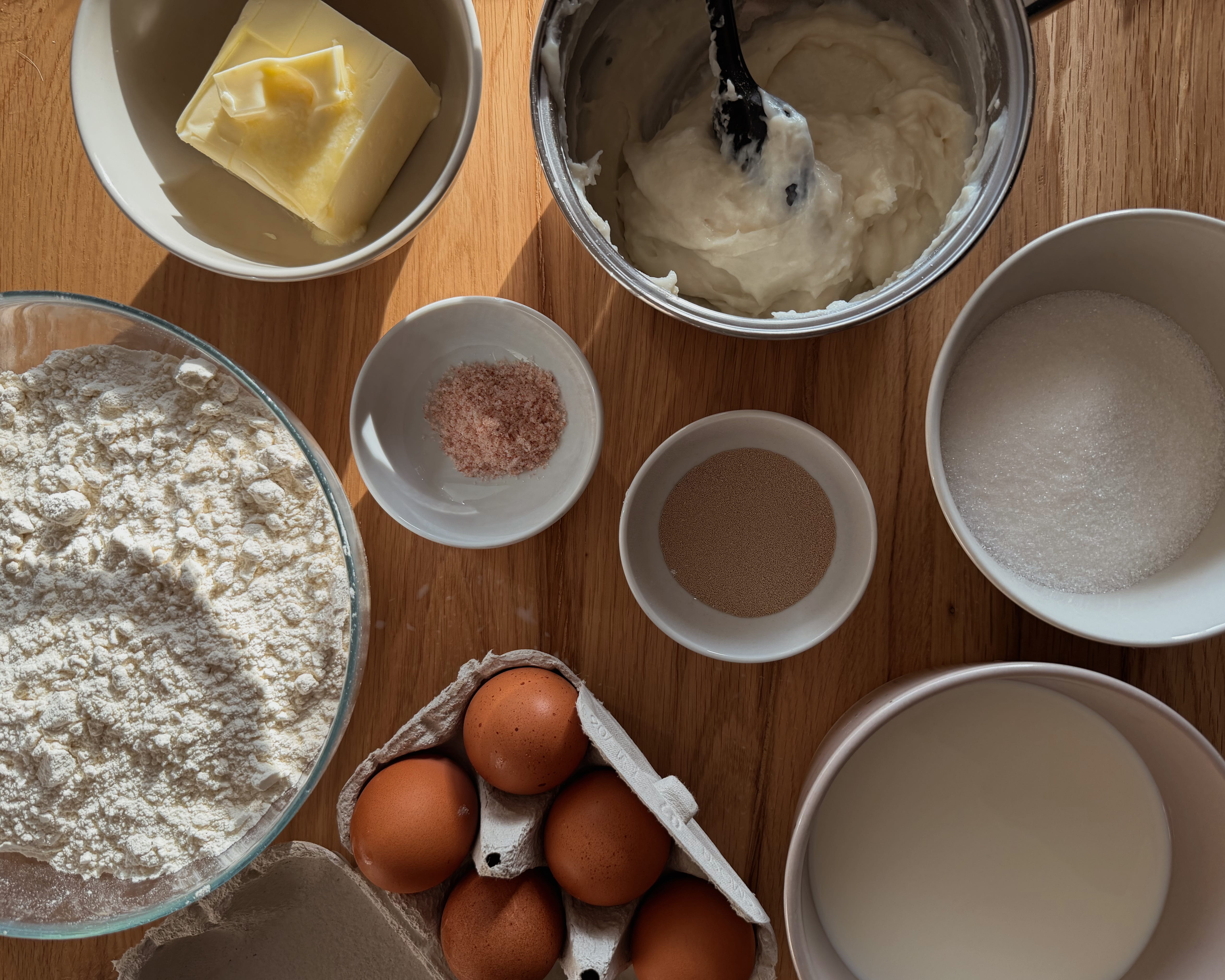
Ingredients
Dough
· Milk (total): 1 cup (240 g), warmed to 105–110°F / 40–43°C
· Instant yeast: 2 ½ teaspoons (8 g)
· Eggs: 2 large, room temperature
· Granulated sugar: ⅓ cup (67 g)
· Salt: 1 teaspoon (5–6 g) if using salted butter (see note below)
· Flour: 3 ½ cups total (about 540 g), divided
· Salted butter: ⅓ cup (76 g), very soft (not melted)
· Salt note (important): salted butter varies by brand. If you use unsalted butter in the dough, use 1 ¼ teaspoons salt (about 7 g) instead of 1 teaspoon.
Tangzhong (this comes from the dough ingredients above)
· Milk: ½ cup (120 g) taken from the total milk
· Flour: 2 ½ tablespoons (about 20 g) taken from the total flour
Filling
· Salted butter: ½ cup (113 g), very soft (spreadable, not melted)
· Brown sugar (packed): 1 cup (200–220 g)
· Ground cinnamon: 2 tablespoons (14–16 g)
· Fine salt: ¼ teaspoon
· Vanilla extract: 1 teaspoon (optional but recommended)
For the “gooey” bake
· Heavy cream: ½ cup (120 g), warmed (not hot)
Brown Butter Cream Cheese Frosting
· Butter: ⅓ cup (76 g), browned and cooled to soft/opaque
· Cream cheese: 6 ounces (170 g), softened
· Powdered sugar: ½ cups, sifted
· Vanilla extract: 1 teaspoon (or ½ tablespoon maple extract)
· Fine salt: ½ teaspoon
How to Make Them
1. Make the tangzhong (the softness step)
In a small saucepan, whisk together ½ cup (120 g) milk and 2 ½ tablespoons (20 g) bread flour.
Cook over medium-low heat, whisking constantly, until it thickens into a smooth paste (it should look like a loose pudding). Take it off the heat and let it cool until warm, not hot.
This is what makes the rolls stay plush instead of drying out.
2. Mix the dough (and hold back some flour)
Warm the remaining milk: you should have ½ cup (120 g) left. Warm it to 105–110°F / 40–43°C (warm to the touch, not hot).
In a large bowl or mixer bowl, combine the warm milk, yeast, and sugar. Add the eggs and the cooled tangzhong.
Now add the salt and most of the flour. Start with about 3 cups and keep the remaining flour aside. Mix until a rough dough forms, then let it rest for about 10 minutes (this makes kneading easier and improves texture).
3. Knead, then add butter last
Knead the dough until it starts looking smoother and elastic, about 6–8 minutes (mixer) or a bit longer by hand.
Once the dough has structure, add the very soft butter gradually. Keep kneading until the dough is smooth and slightly tacky, not dry.
If the dough feels stiff, add a tiny splash of milk (a teaspoon at a time).
If it feels overly sticky and won’t tighten up, knead a bit longer first; only then add flour one tablespoon at a time.
4. First rise (choose the schedule that fits your life)
Put the dough into a lightly greased bowl, cover, and let it rise until puffy and close to doubled.
If you’re baking the same day, this usually takes 60–90 minutes in a warm spot.
If you want the “bakery” flavor and easier rolling, do this instead: let the dough sit at room temperature for 20 minutes, then refrigerate it 8–24 hours. The next day, let it sit out for 20–30 minutes so it softens slightly, then continue.
5. Make the filling (smooth paste, not loose sugar)
Mix together the filling ingredients until you have a thick, spreadable paste: soft butter, brown sugar, cinnamon, salt, and vanilla.
Using very soft butter (not melted) keeps the filling creamy and helps prevent it from leaking out while baking.
6. Roll, fill, and shape
Lightly flour your counter. Roll the dough into a large rectangle, about 16×12 inches (40×30 cm).
Spread the filling evenly across the dough, leaving a small border at the far edge so it seals when you roll it up.
Roll tightly into a log. Slice into 12 rolls. (Dental floss works best for clean cuts.)
Place the rolls in a greased 9×13-inch (23×33 cm) baking dish, leaving a little space between them.
7. Second rise
Cover the pan and let the rolls rise until they look puffy and soft, usually 30–60 minutes.
A simple test: gently press one roll. If the dent springs back slowly, they’re ready.
8. Add the cream and bake
Warm the heavy cream until warm (not hot), then pour it evenly over the risen rolls.
Bake at 350°F / 175°C for 22–28 minutes, until lightly golden and the center rolls are baked through but still soft.
If you have a thermometer, the center roll should be around 190–195°F / 88–90°C.
Brown Butter Cream Cheese Frosting
Brown the butter (and cool it properly)
Melt ⅓ cup (76 g) butter in a small pan. Keep cooking until it smells nutty and you see golden-brown bits at the bottom.
Immediately pour it into a bowl (so it doesn’t burn) and let it cool until it turns opaque and soft again. You want it spreadable, not hot and liquid.
Whip the frosting
Beat the cream cheese until smooth. Add the cooled brown butter and beat until creamy.
Add the powdered sugar, vanilla (or maple), and salt, then mix until fluffy and smooth.
Spread it over the rolls while they’re warm so it melts into the swirls.
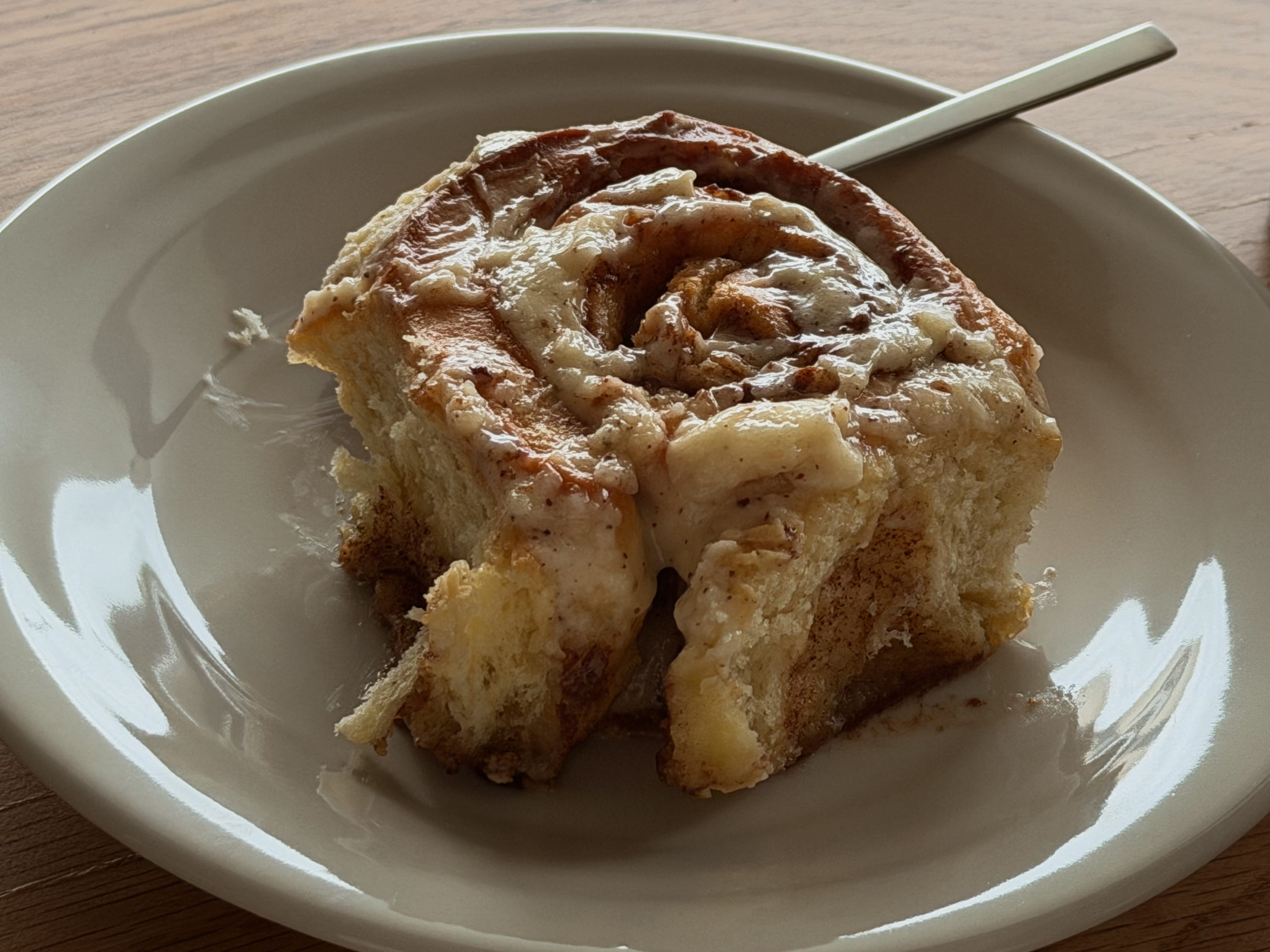
Notes That Prevent Common Cinnamon Roll Disasters
If the rolls turn out dense
Usually it’s too much flour or not enough kneading before butter goes in. Next time, hold back flour and knead until the dough looks elastic before adding butter.
If the filling leaks out
That happens when the filling butter is melted or the rolls are under-proofed. Keep the filling butter very soft (spreadable) and let the shaped rolls get properly puffy before baking.
If the tops brown too fast
Cover loosely with foil for the last few minutes and let the centers finish baking.
If you’re using a fan / convection oven
Fan ovens bake faster and dry things out more easily.
Lower the temperature to 165°C / 330°F
Start checking the rolls 5 minutes earlier
If the tops brown too fast, loosely cover with foil and finish baking
This keeps the rolls soft inside instead of drying out before the centers are done.
If you’re using a conventional (no fan) oven
This recipe is written for a standard oven.
Bake at 175°C / 350°F
Place the pan in the middle rack
Avoid opening the oven too early, or the rolls can collapse
If you’re using a metal pan
Metal pans heat quickly and give more browning.
Expect slightly darker edges
Check for doneness on the earlier side
If the top browns too fast, tent loosely with foil
This is the closest result to classic Cinnabon-style baking.
If you’re using a glass or ceramic pan
These pans heat more slowly but retain heat longer.
Rolls may take a few extra minutes
Watch the centers, not just the color on top
Let the rolls rest in the pan for a few minutes after baking to finish setting
Glass and ceramic are great for very soft, evenly cooked centers.
How to know they’re done (without guessing)
The rolls should look lightly golden, not dark
The center rolls should feel set but still soft
If you use a thermometer, the center should be around 190–195°F / 88–90°C